Sports Betting vs Prediction Markets
Two Markets. One Skill. Here’s What Actually Separates Them.
You’ve been watching this closer than most people have. You’ve done the reading, watched the numbers move, and followed the story while most people were still catching up. That gap between what you know and what’s been priced in is the only thing worth focusing on.
Two products exist to let you act on it. They look different on the surface, but they reward the same thing underneath.
This is not an argument for one over the other. Think of it as a map.
Table of Contents
What Sports Betting Actually Is
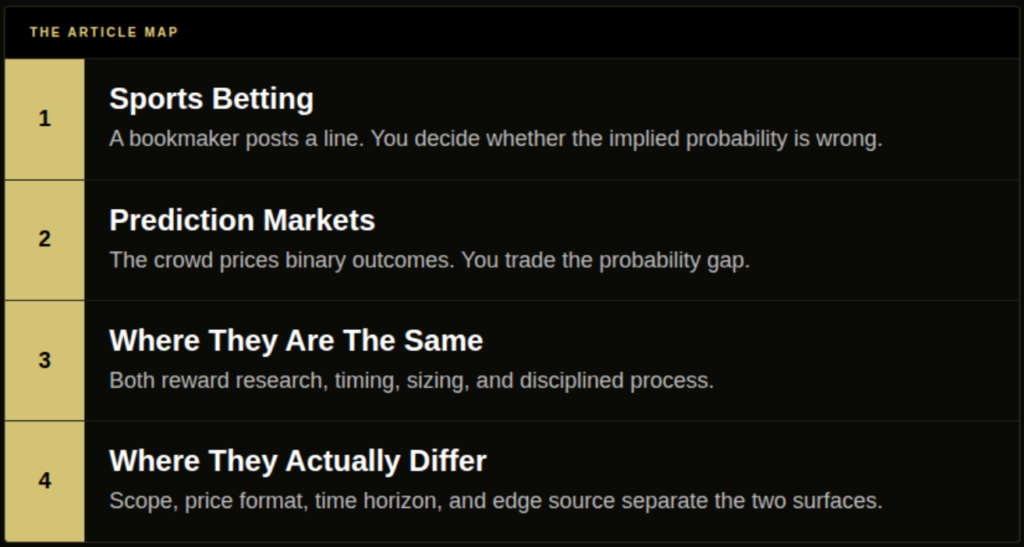
A bookmaker posts a line and you either agree with it or you don’t. That disagreement, when you’re right, sized correctly, and repeated over time, is where edge compounds.
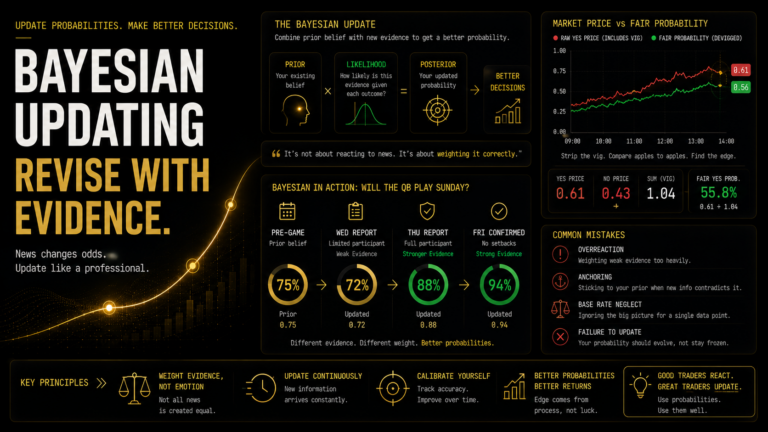
Every line has a margin baked into it: the vig. You’re not trying to beat the bookmaker directly. You’re trying to beat the implied probability they’ve set, and when their number is wrong and yours turns out to be right, that’s the position worth taking.
Lines move because information moves through the market. Sharp money arrives first, public money follows behind it, and by the time most people act on something, the edge has already shifted somewhere else entirely – which is why timing matters just as much as the read itself.
What sports betting rewards above everything else is domain depth. The person who has watched 300 IPL matches reads a lineup change very differently than someone who just saw a headline about it – not because they’re smarter, but because they’ve accumulated a specific kind of pattern recognition that doesn’t transfer easily from a summary article.
Live betting sharpens this further. A match already in motion creates edges that didn’t exist sixty seconds earlier. A red card, a momentum shift, a manager’s tactical adjustment at half-time – the market reprices in real time, and so does your read if you’re paying close enough attention.
The infrastructure is mature. Markets are deep. Events are scheduled well in advance. For someone with genuine sports knowledge, this is a structured arena with clear rules and real surface area for finding edge consistently.
What Prediction Markets Actually Are
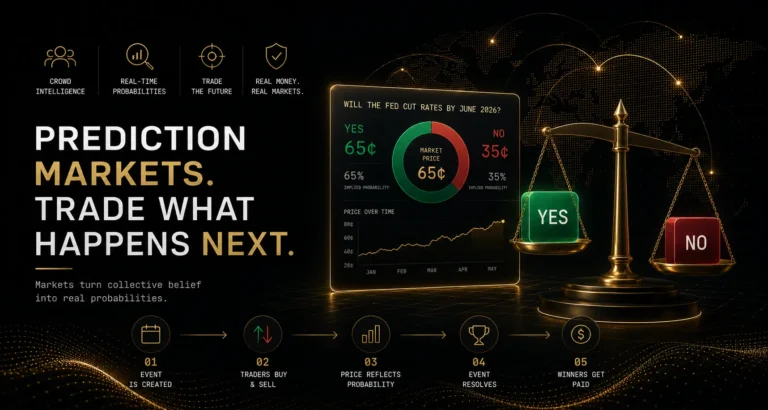
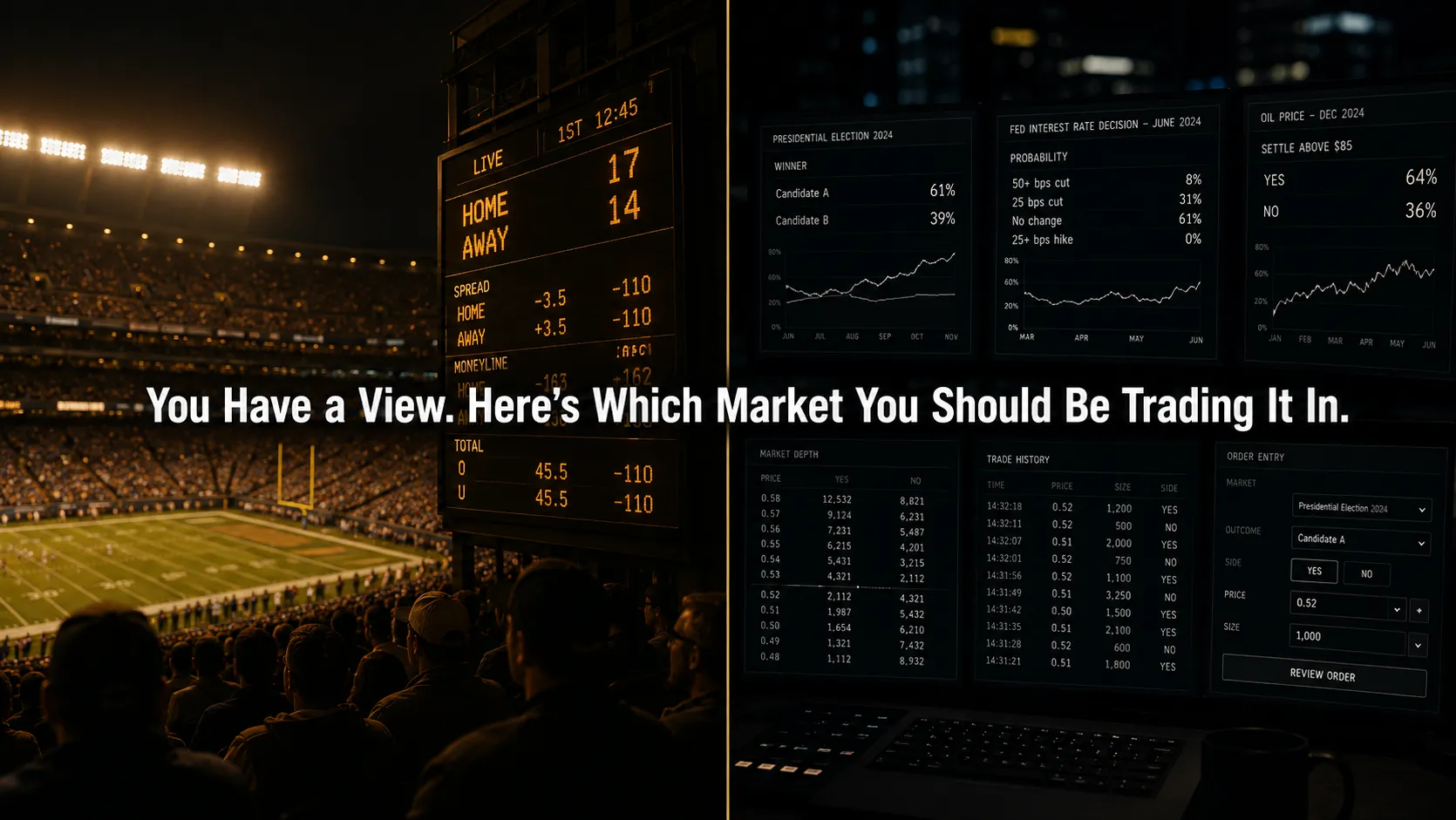
Unlike a sportsbook, a prediction market doesn’t set the price for you. The crowd does. Every contract has a binary outcome, YES or NO, and the price it trades at reflects what participants collectively believe the probability to be at that moment.
You buy at 61 cents, the market is saying this has a 61% chance of resolving YES. Your edge is in disagreeing with that number and being right about it before anyone else is.
The mechanics sit much closer to trading than they do to traditional betting. You can enter a position, watch it move as new information arrives, and exit well before final resolution. The edge isn’t only in being right about the outcome. It’s in seeing the signals before anyone else.
Prediction markets aren’t constrained to sport. Elections, tournament outrights, player transfers, political leadership markets, any real-world event with a verifiable outcome and a known resolution date is a potential market. That opens up a fundamentally different universe of opportunity for the right kind of participant.
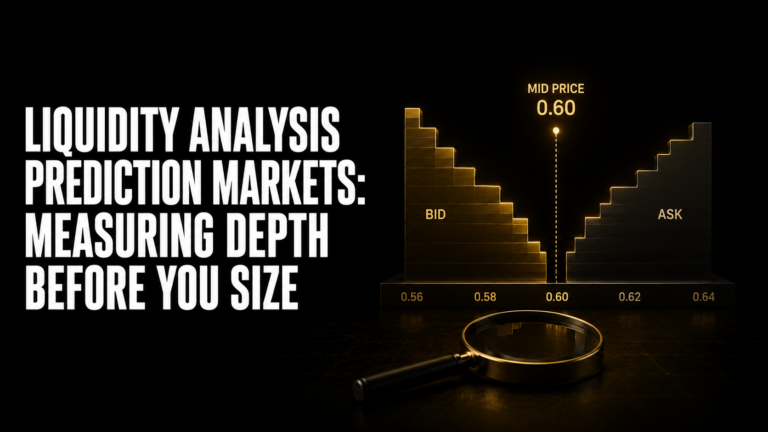
Worth being upfront about something: prediction markets have a real liquidity gap on anything outside the top markets right now. A major election or a high-profile policy decision will have deep order books and tight spreads. A regional league, a niche regulatory outcome, a mid-tier corporate event – the spreads can be wide enough to make an otherwise solid read not worth acting on.
Where liquidity is healthy, the pricing is genuinely interesting. Sportsbook lines are set by professionals whose entire job is to be accurate. Prediction market prices are set by a crowd, which means the errors are different in character and sometimes much larger in magnitude.
Crowd pricing tends to overprice narrative and underprice base rates consistently, and that pattern is exploitable when you know what to look for.
Where They Are The Same
Strip both all the way down to first principles.
You have a view on something, and the market has a different view on the same thing. You’re putting capital behind the gap between those two assessments. That is the entire game in both products, without any exceptions.
The reason these markets exist at all is that information is unevenly distributed across participants. Someone always knows more than the current price reflects, and the question is whether they act on it fast enough and in the right place to capture that edge before it closes.
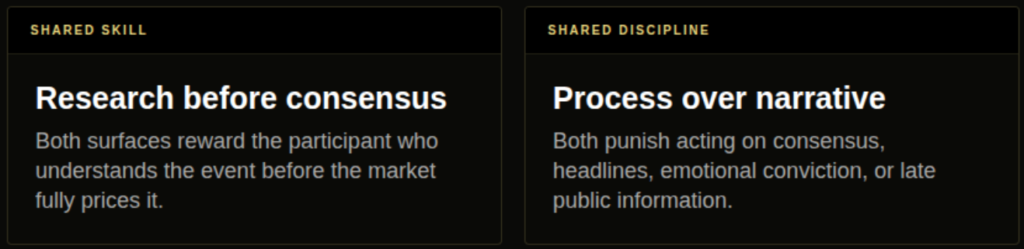
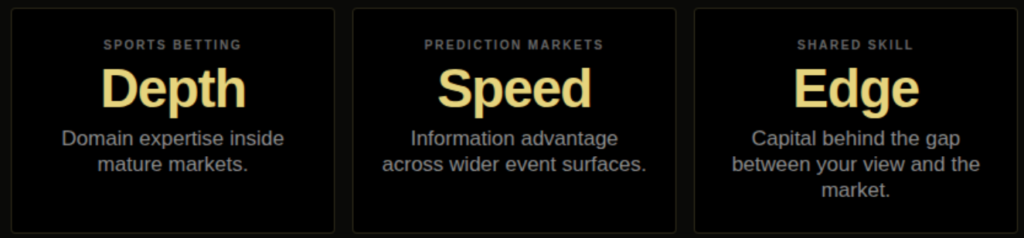
The skill set that travels across both is essentially identical: research before the market does it, time the entry correctly, size the position relative to actual edge rather than emotional conviction, and track what you got right and why so the process compounds over time rather than just the outcomes.
The behavior that gets punished is also identical in both: acting on narrative instead of signal. The team everyone is talking about this week. The candidate dominating every headline. Consensus is already priced by the time most people see it, which means the edge lives in the place where consensus hasn’t arrived yet.
Where They Actually Differ
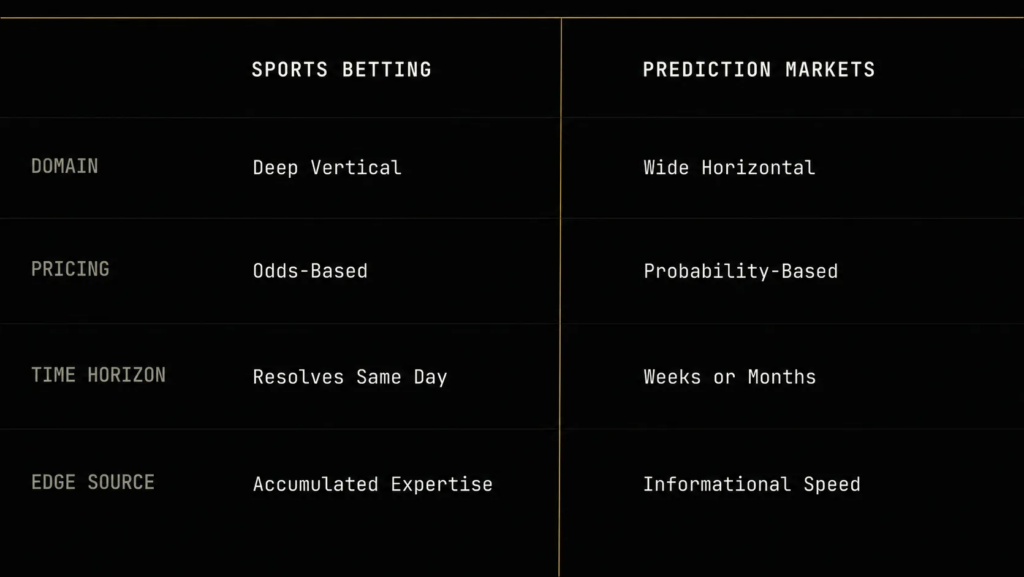
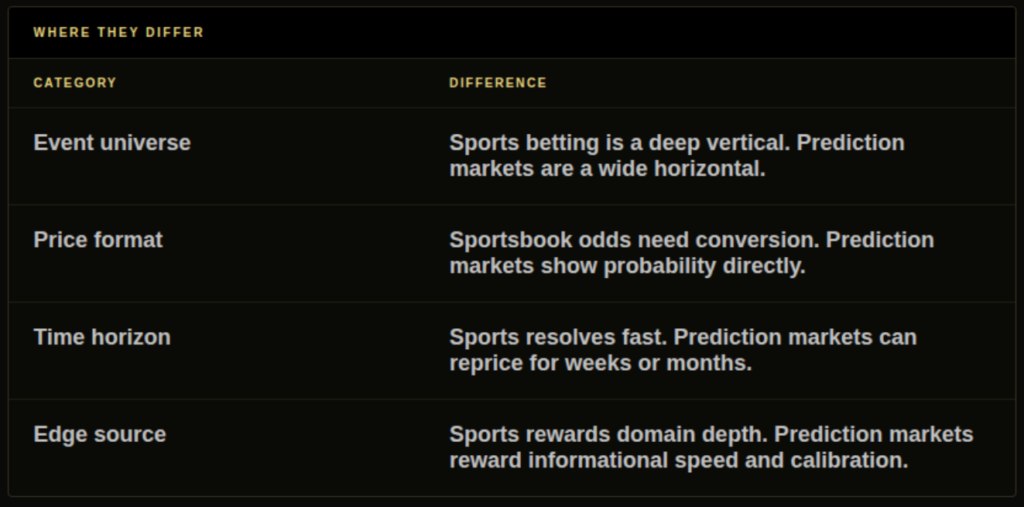
The event universes couldn’t be more different in scope. Sports betting is a deep vertical – mature, liquid, with decades of line-making history and a fixed universe of scheduled matches and established leagues.
Prediction markets are a wide horizontal where an edge opportunity can surface at any moment from a press release, a polling shift, or a team news update buried in a training ground report somewhere. Different arenas entirely, even when the underlying skill looks similar.
Sportsbook odds obscure the underlying probability from most participants – the majority of people never convert +240 into 29.4% before they act on it. Prediction market contracts are priced directly in probability terms from the start, which fundamentally changes how you identify where the mispricing actually is.
The time horizon is where the psychology really separates. Sports betting resolves fast – you know whether you were right by end of day, sometimes within 90 minutes. Prediction markets can hold a position open for weeks or months as new information keeps arriving and repricing the contract.
On edge source: sports betting rewards domain expertise built over years of close attention. Prediction market edge is more often about informational speed – reading the actual policy document rather than the article written about it, understanding the implication of a data point before the crowd processes the headline.
Who Ends Up Where
The sports bettor’s path usually starts with the sport and works outward. The knowledge came first, and the trading followed when they realized their read was consistently better than what the line was reflecting. Years of watching a specific league, following a specific team, studying a specific type of market – that accumulated depth is the asset, and it took a long time to build.
The prediction market participant usually thinks in probabilities before they think in outcomes at all. Their first instinct when reading news isn’t “what happens next” but “what is the market currently pricing here, and is that number actually accurate?”
The crossover participant tends to be sharper for having done both seriously. The mental models transfer in useful ways – implied probability thinking from sports betting carries directly into prediction market calibration, and understanding how crowd behavior drives prices gives you a cleaner lens on line movement in sport.
What the sharpest participants in either market share is one defining trait. They treat it as a proper business: a research process, disciplined position sizing, consistent win rate tracking, careful edge documentation.
The Bigger Picture
Both markets are growing, and the tools are starting to catch up. Real-time signal aggregation, automated execution, multi-market monitoring – the participant who builds better infrastructure around their process earlier compounds their edge faster than those who don’t.
The gap between informed and uninformed participants is not narrowing. It’s widening as the tools improve and serious participants pull further ahead.
The distinction between the two markets is also blurring at the edges. Sports outcomes are appearing on prediction market platforms. High-volume election markets are drawing participants who came from sports betting backgrounds.
The participant who genuinely understands both environments is better positioned than someone who has only ever operated in one of them – not because breadth is inherently valuable, but because the cross-pollination of mental models tends to sharpen your thinking in whichever one you focus on most.
The right market for you isn’t the one with the best headline odds or the most familiar interface. It’s the one where your specific edge has the most room to operate.
Before asking which product is better, ask a more useful question. Where is your information advantage actually sharpest? What kind of event do you read more accurately than the market? What time horizon fits how you actually think and operate?
Those answers point to the right surface. Maybe it turns out to be one of them. Maybe it turns out to be both, and the overlap is where you’re actually sharpest.
The Bottom Line The market only asks one question, and you already know what it is. Where is your edge sharper than the price? That’s what DG3 is built for.
Sign up now – DG3 Terminal
Also read:
Fair Value Prediction Markets
What Is a Prediction Market? The Complete Guide for 2026
Price Discovery in Prediction Markets vs Sportsbooks