.png?updatedAt=1779992389202)
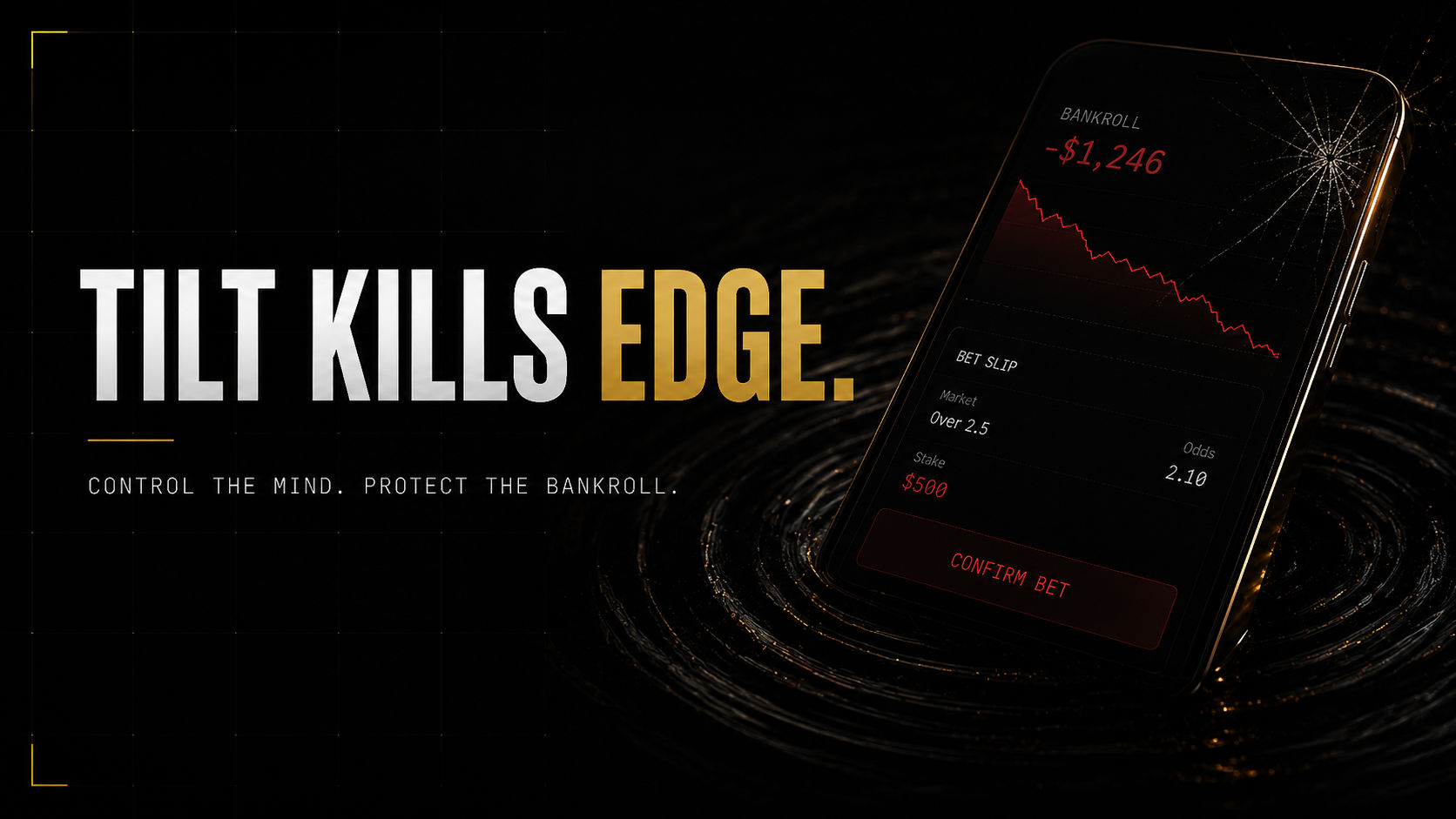
Your Biggest Opponent Isn't the Bookmaker.
Ryan had a simple system. Back value. Bet small. Stay patient. Easy to follow on a Tuesday afternoon. By Saturday night he had broken every rule. He wasn't betting anymore. He was on tilt - and it was costing him everything.
"Tilt isn't one big moment. It's a slow leak. By the time you notice it, you're already underwater."
When your emotions start making your bets
Tilt is what happens when a loss - or a run of losses - gets inside your head and starts driving your decisions. You stop thinking clearly. You stop following your system. You start betting to feel better rather than to find value.
Most punters think tilt is obvious - screaming at the screen, doubling up out of anger. That is the extreme. The dangerous kind is much quieter. It creeps in slowly across three stages.
You want to be right
You lost but the logic felt sound. So you place the same bet again - not because the value is there, but because you want to prove yourself right. This is the sneaky one. It feels rational.
You start cutting corners
Research that takes 40 minutes gets done in 10. You skip checks you normally do. You tell yourself you already know enough. You don't - you're just impatient and emotionally in a hurry.
You go for broke
Bet sizes double. Logic is gone. You're not picking teams anymore - you're picking numbers big enough to fix everything in one go. This is where sessions end badly.
How to spot tilt before it's too late
These are the patterns that show up before you consciously realise something is wrong. Learn to recognise them in yourself.
Betting faster
A session that normally takes 3 hours is now done in 40 minutes. Speed is not efficiency here - it's a red flag.
Chasing bigger odds
Your average odds creep higher each bet. You're unconsciously reaching for bigger wins to fix the problem faster.
Staying longer
You had a stop time and you blew past it. Five more minutes became two more hours. The session you planned is nothing like the one you had.
Instant rebetting
You lose and within 90 seconds you've placed another bet. No research. No new info. Pure reaction. That is tilt betting.
"The most expensive bets you will ever place are the ones that felt completely reasonable at the time."
Speed makes tilt worse. Much worse.
On a traditional sportsbook, placing a bet takes 15 to 20 seconds. That tiny delay is actually protective - it gives your rational brain a chance to interrupt your impulse.
Crypto sportsbooks have removed almost all of that friction. Wallet connected, one click, bet confirmed in two seconds. Impulse and action happen almost simultaneously. And when your crypto portfolio is dropping at the same time as your bets - that's two emotional hits landing at once.
"Crypto removes the friction that protects you."
Speed feels like freedom. Sometimes it's a trapdoor.
What catches crypto bettors every time
Each one is common. Each one is avoidable with one simple rule decided before you start.
You lose your session balance. You tell yourself one more deposit will turn it around. Your wallet is right there. Four seconds and you're back in. Traditional bettors are forced to stop. Crypto bettors aren't.
Your ETH drops 12%. Your bets are breaking even. You feel down overall - so you start betting bigger to make the whole picture green again. You're no longer looking for value. You're managing anxiety.
Crypto sportsbooks never close. At 3am, tired and down, there is always something to bet on. It feels like opportunity. It is not. It is a trap that looks like a second chance.
Four things to do before every session
The punters who manage tilt well do not rely on willpower in the heat of the moment. They set rules before they start - because once emotions kick in, the rules are all you have left.
How am I feeling right now?
Am I carrying stress, anger, or last night's loss into this session? If yes, wait.
What does a good session look like today?
Give it a specific end time and a specific target. No vague intentions.
What is my stop-loss today?
Write a number down. When you hit it, the session ends. No negotiation, no exceptions.
Use the 10-minute rule after any painful loss
Step away for 10 minutes. Come back and ask - would I place this next bet if I had not just lost? If no, it is tilt. Do not place it.
Saturday night Ryan and Tuesday afternoon Ryan are two completely different people.
One of them knows what he is doing. The other needs a locked door, a stop-loss, and someone to turn the screen off.
Tilt is not a personality flaw. It is a natural human response to loss. The punters who manage it are not smarter or more disciplined than you - they just built their rules before the emotional pressure arrived. Build yours now, while you are calm.
"The best trade you will ever make is the one you decide not to place."
Build it now. While you are calm.