.png?updatedAt=1779992389202)
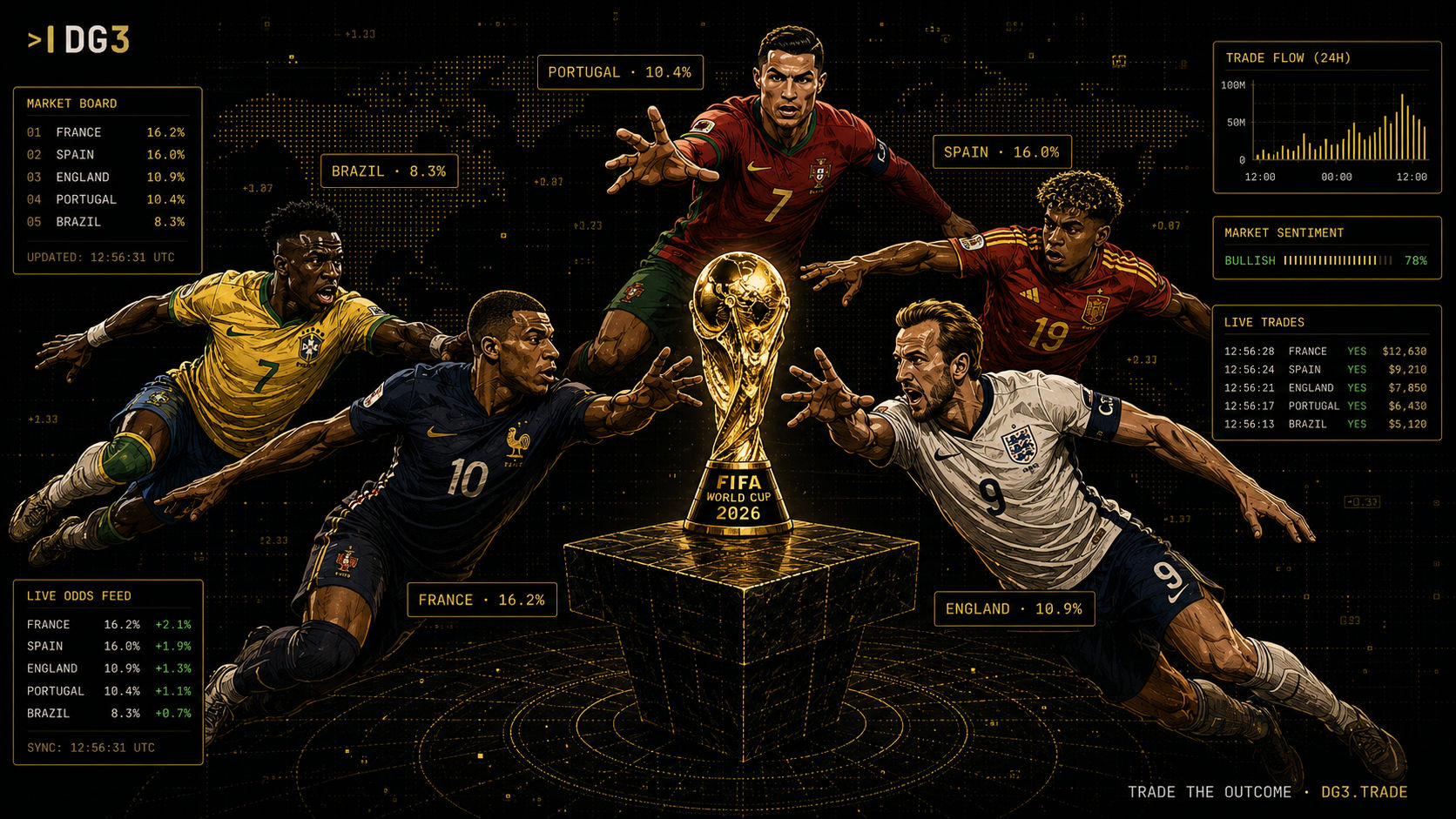
FIFA World Cup 2026: God Mode in the Markets
Why the World Cup is Different (And Why That's the Point)
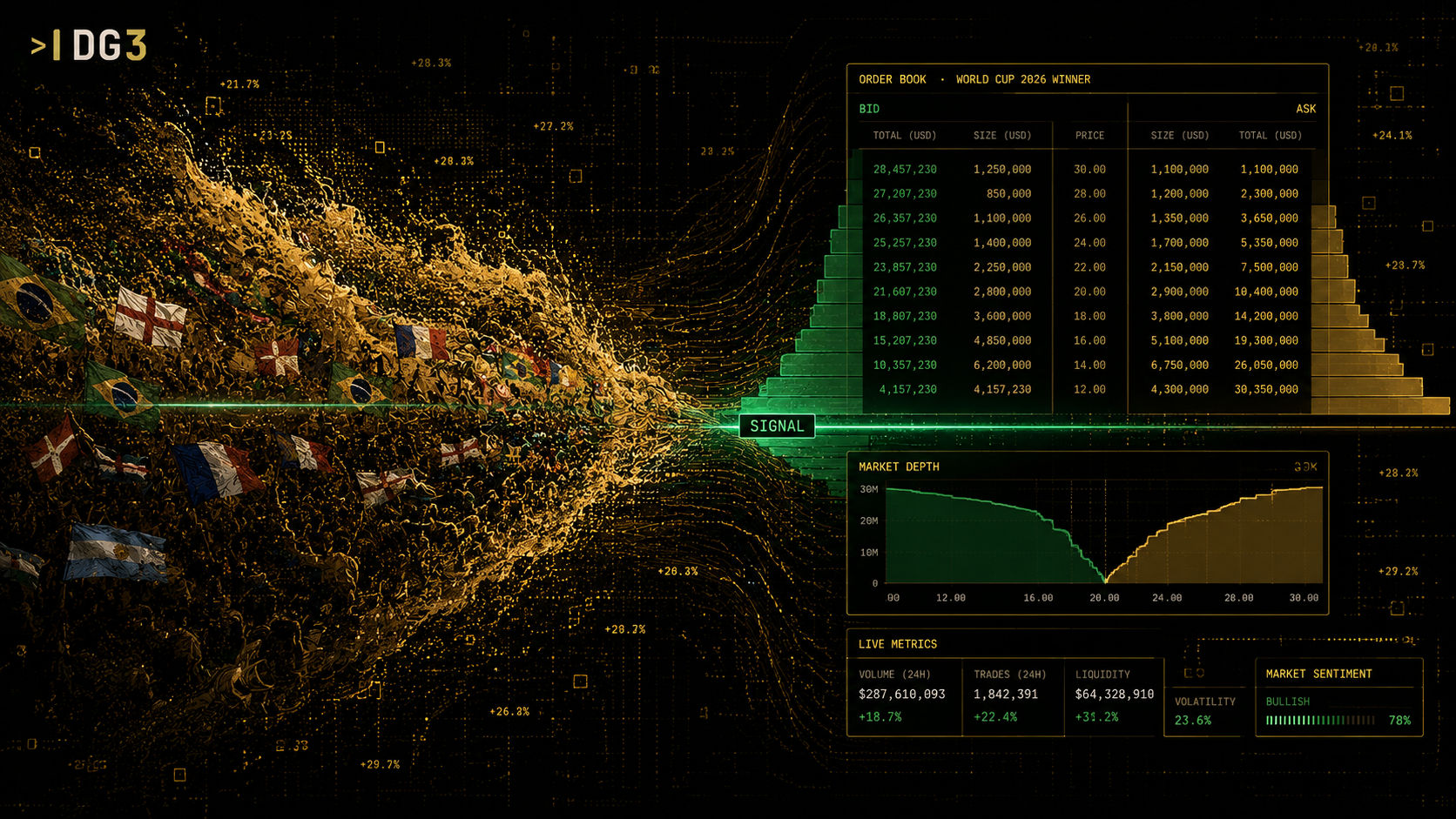
No other tournament compresses this much volume, this much casual money, and this much global attention into a single market environment. The Champions League has depth. The Euros have intensity. But the World Cup has scale that neither can touch -- 48 teams, 104 matches, and a viewer base that spans every timezone on earth.
That scale does something specific to prediction markets. It floods them. Casual traders pile into winner markets on name recognition alone. Brazil gets backed because it's Brazil. England gets backed because it's England. The prices stop reflecting probability and start reflecting sentiment -- and sentiment, for a sharp trader, is just mispricing with a flag on it.
There's also the structural complexity. A month-long tournament with group stages, knockouts, and a final means markets are live and repricing constantly. A single red card in a group match can reshape the winner market. A key injury before the Round of 16 can swing a team's odds by double digits overnight. The information cycle is relentless, and most traders can't keep up with it.
That's the point. The World Cup is hard to trade well precisely because it's so easy to trade badly. The edge isn't in having an opinion on who wins. It's in understanding how the market prices those opinions -- and where it gets it wrong.
The Liquidity Map: Where the Smart Money Actually Lives
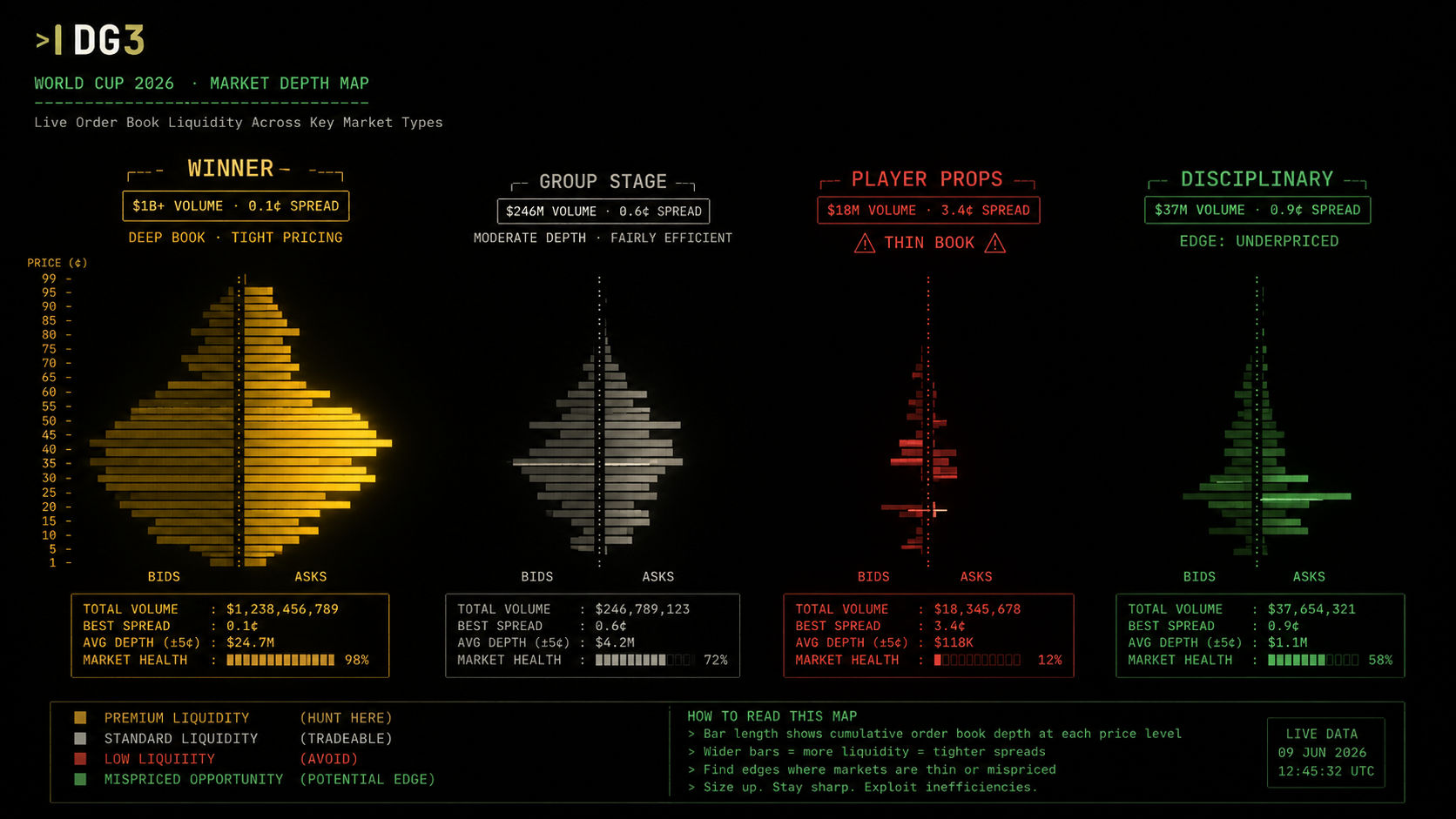
Not all World Cup markets are worth your time. The menu looks generous -- winner, top scorer, group winners, match results, player props, correct score -- but most of it is a thin book dressed up as an opportunity. Touch the wrong market and you're not trading, you're donating spread.
The winner market is where the liquidity concentrates, and the numbers show it. Across all 48 team winner markets on Polymarket right now, total volume sits above $1 billion, with individual team markets ranging from $720K to $14M in available liquidity. The bid-ask spread across every single one: 0.1 cents. That's as tight as it gets. Price movements here track actual information rather than a single large order from a thin-book actor. If you're building a meaningful position anywhere, it starts here.
Group stage match markets are the next tier. Liquid enough to trade seriously, but they expire fast. One shot at the right side of the price -- if you're late, the market's already moved. These reward traders who do the homework before kickoff, not during.
Below that, tread carefully. Most player props are shallow books where a single whale can spike a price 10 cents with no news behind it. Simultaneous spikes across multiple players collapsing within the hour with no catalyst -- that's thin-book manipulation, not smart money. Move on.
The exception is disciplinary markets. Cards, fouls, bookings. Thinly traded because most traders don't know enough to touch them -- which is exactly why they're worth targeting if you do. Referee tendencies are measurable. Tactical setups predict foul rates. Certain players carry career yellow card rates the market consistently underprices. The edge is real, the capacity isn't -- so trade them small, trade them smart.
Rule of thumb: check spread and volume before you touch anything. Wide spread, low volume -- you're not finding edge. You're becoming it.
Fading the Public: How Tournament Hype Distorts Prices
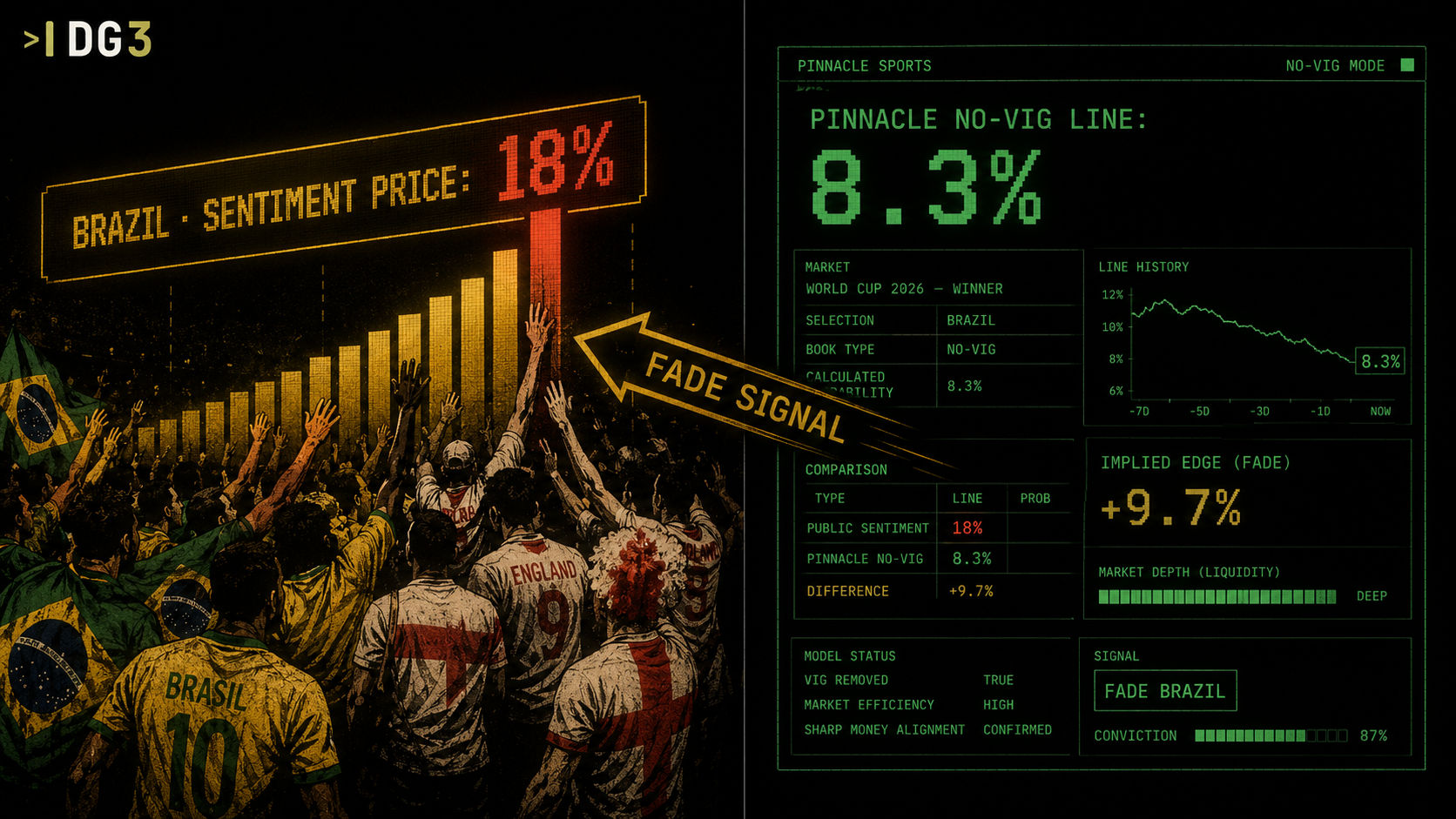
The World Cup is the one tournament where nation-loyalty trades at scale. Brazil gets backed because it's Brazil. England gets backed because it's England. France gets backed because a casual punter watched the 2018 final and never updated their priors. None of this is analysis. All of it moves prices.
The result is structural overpricing on the big names -- and structural value on everyone else. At tournament open, the gap between a team's implied probability and their true probability is widest on the marquee nations. But "sentiment is mispricing with a flag on it" is a philosophy. Here's the actual workflow.
Pull the implied probability from the prediction market for the outcome you're evaluating. Then pull Pinnacle's closing line for the same outcome -- Pinnacle runs the lowest vig in the industry at around 2%, meaning their lines reflect sharp money more accurately than any retail book. Strip the vig from Pinnacle's odds using the additive method: take each outcome's raw implied probability, sum them, then divide each by the total. That's your no-vig fair probability. Now compare the two numbers. If the prediction market is pricing a team meaningfully higher than Pinnacle's no-vig line with no corresponding news catalyst, you're looking at sentiment inflation. That's your fade signal.
The tricky part is knowing when the market is actually right. High volume on a big nation pre-tournament with no corresponding movement in sharp sportsbook lines is a flag. The market is being pushed by sentiment, not information. That's fadeable.
But be careful with momentum. Fading Brazil at 100 days out is a very different trade to fading Brazil after they've won their group without conceding. Public money and real results start to converge in the knockout rounds -- by the quarterfinals, the casual money has mostly washed out and prices get sharper. The window for fading the crowd is widest at tournament open, and it doesn't wait for you to feel ready.
The Group Stage Window: When to Load Up and When to Wait
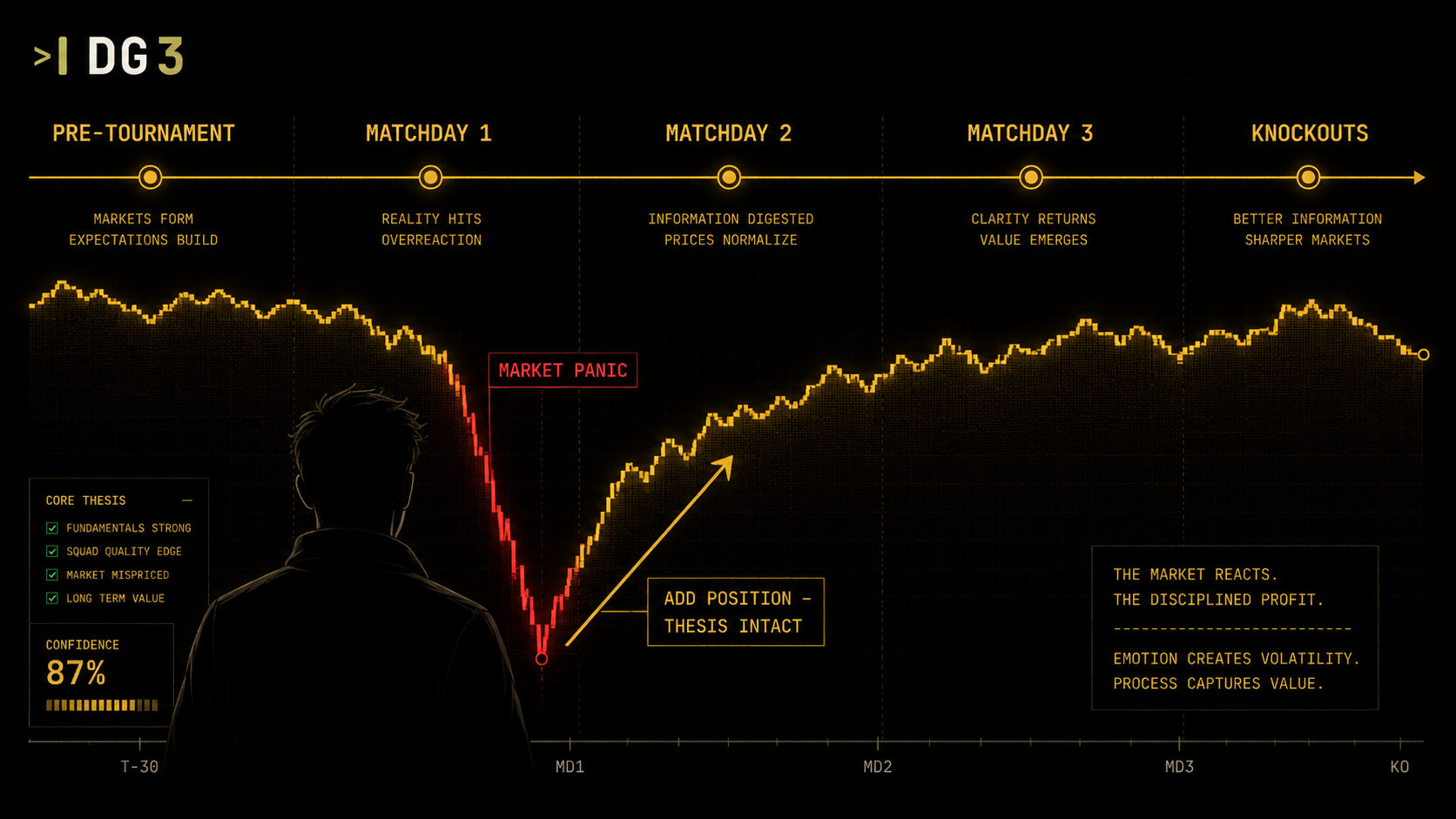
Nothing in the tournament is more information-dense than the group stage. Twelve days, 48 matches, a constant stream of results repricing every market simultaneously -- and most traders either jump in too early with incomplete information, or wait so long the value is already gone.
Staged positioning is the answer. A rough framework that holds up: enter 25-30% of your intended position pre-tournament on high-conviction teams, before results start doing the pricing for you. The winner market at this stage is still running on sportsbook lines, FIFA rankings, and public sentiment -- that's where pre-tournament value lives.
Then the group stage hits and everything moves fast. A surprise result in Matchday 1 can shift a contender's winner market odds by 15 cents overnight. A group favorite stumbling in their opener gets faded hard -- often harder than the result warrants. That overcorrection is tradeable. Markets panic faster than they should on early group stage results because the sample size is one game and the casual money reacts emotionally. Matchday 1 dislocations are where you add to positions, not exit them.
The discipline is in knowing which moves to trade and which to ignore. A star player picking up a yellow card in Matchday 1 matters. A heavyweight team grinding out an ugly 1-0 against a minnow doesn't -- but the market will often price it like it does. Ugly wins still count. Read the result, not the performance.
By Matchday 3, the picture clarifies fast. Qualification confirmed or eliminated, brackets take shape, smart money starts repositioning for the knockouts. If your pre-tournament thesis is still intact, hold. If the group stage has genuinely broken it -- not just tested it -- adjust. There's a difference, and knowing which one you're looking at is most of the job.
Injury and Lineup Intel as a Trading Signal
Information moves World Cup markets faster than almost anything else. A confirmed injury to a key player can shift a team's winner market odds by double digits before most traders have even seen the headline. The edge isn't in knowing the news -- it's in knowing it first, and knowing what it's actually worth before the market prices it in.
The window between information and price is where the money is made. On major injury news, markets can reprice within minutes. The window widens on second-tier intel -- a training ground knock, a coach's cryptic press conference answer, a leaked lineup from a local journalist with a reliable track record. That's where sharp traders live.
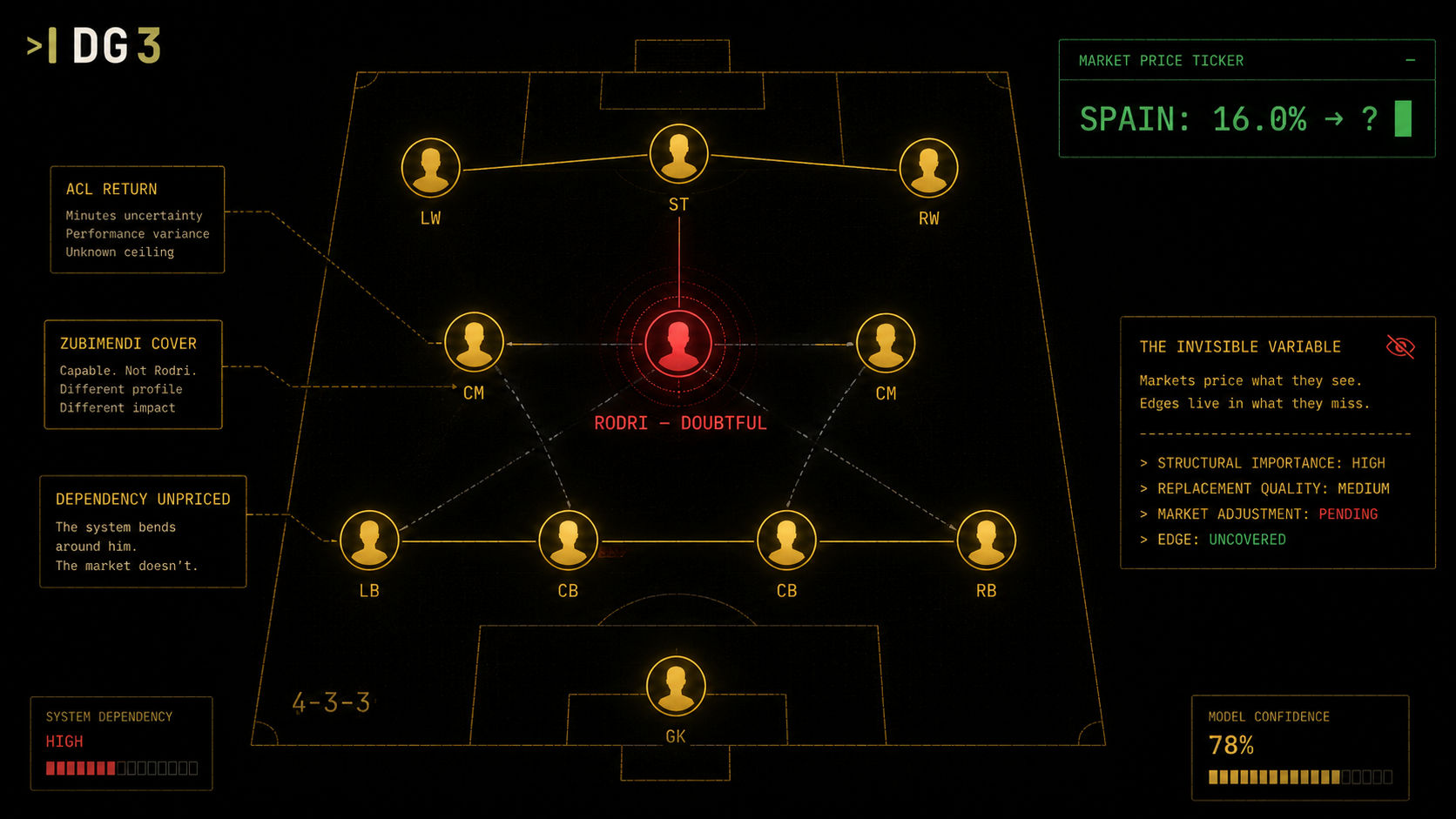
Not all injury news is equal and the market doesn't always price the difference correctly. The players the market underprices aren't the stars -- it's the players who make the stars function. Rodri is the cleanest current example. Spain's Ballon d'Or winner tore his ACL in September 2024 and has only recently returned to regular action. His presence doesn't just add quality -- it unlocks the entire Spanish midfield structure. Without him, Zubimendi steps in and the system operates at a meaningfully lower level. The question for Spain's odds isn't whether Yamal is fit. It's whether Rodri is fit enough to play like Rodri. Markets that price Spain purely on squad depth miss that dependency entirely.
Know the dependency chains, not just the star names. The creative midfielder behind the striker. The pressing trigger who sets the defensive shape. The set piece taker who accounts for a team's dead ball threat. These are the players whose absence gets systematically underpriced because the casual money doesn't see them.
Lineup intel works the same way. A surprise tactical setup can shift the expected goal profile of a match before a ball is kicked. Find the journalists, the club insiders, the local beat reporters who break team news before it hits the aggregators. Spain's press ecosystem leaks lineup intel reliably. So does France's. Brazil's domestic media operates on a different cycle entirely and frequently surfaces squad news days ahead of official confirmation. If you're reading the same English-language aggregators as everyone else, you're pricing at the same time as everyone else.
The traders who consistently win on information aren't the ones who read the news. They're the ones who've already positioned before it becomes news.
The Mistakes Sharp Traders Still Make (And How to Avoid Them)
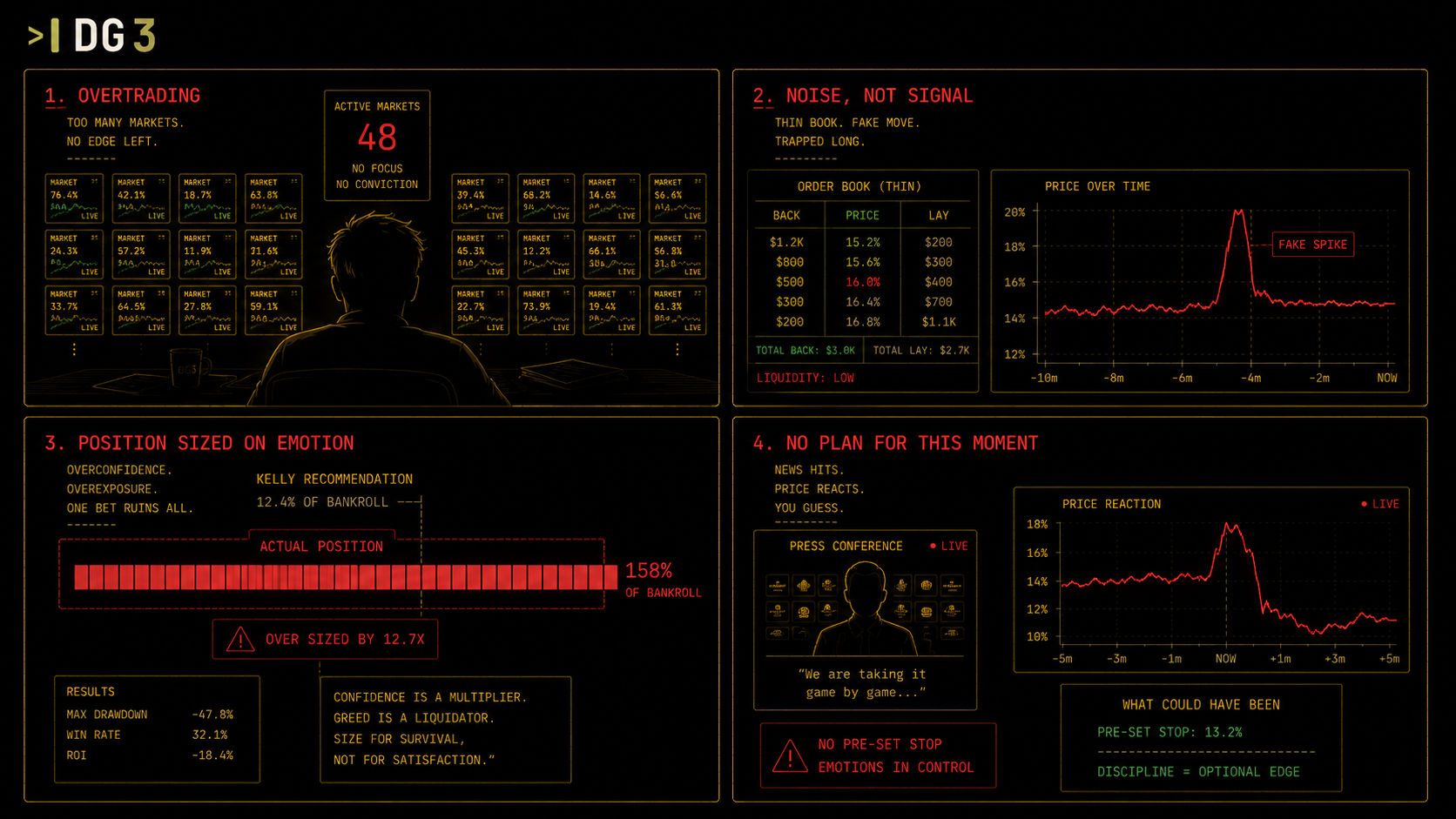
Knowing the framework doesn't immunize you from the errors. Most of the mistakes that blow up World Cup trading accounts aren't made by people who don't know what they're doing -- they're made by people who do, and who get sloppy anyway.
The first is overtrading the group stage. Forty-eight games in twelve days means there's always something live, always a market moving, always a reason to act. The traders who come out of the group stage in the best shape traded less than they wanted to, not more.
The second is mistaking volatility for signal. A price spike in a thin market looks like news. More often it's a single large order hitting a shallow book, snapping back within the hour. If there's no corresponding news and no sportsbook line movement, it's noise. Chasing it is one of the most expensive habits in prediction market trading.
The third is position sizing on emotion. Your pre-tournament pick loses their opener. The market overcorrects. Your thesis is intact. You add -- but you add too much, because the loss triggered something that isn't analysis. Doubling down on a thesis and doubling down on a feeling look identical in the moment and produce very different results over time.
The fourth is holding through known information events without a plan. A key injury press conference. A Matchday 3 result that determines bracket positioning. These are moments where the market will move hard. If you don't have a pre-decided plan for when that information lands, you'll make the decision under pressure. And pressure is where discipline goes to die.
The World Cup comes around once every four years. The markets it generates -- the volume, the inefficiencies, the information gaps -- don't last much longer than the tournament itself. Traders who show up prepared will find more edge in the next six weeks than most markets offer in a year.
The six sections above aren't a guarantee. They're a framework. The work is still yours -- the research, the timing, the discipline to hold a position when the public is panicking in the opposite direction. But the traders who combine that framework with the right tools are the ones who come out the other side with something to show for it.
DG3 is built for exactly this. Real-time market tracking, price movement signals, and automation that lets you act on information before the window closes. If you're serious about trading the World Cup, this is where you do it.
Trade smarter →