What the 2026 Transfer Window Actually Means for Prediction Market Traders
Every major signing this summer shifted real money on prediction markets. Not metaphorically – within hours of a transfer confirmation, prices on Kalshi and Polymarket moved. Traders who spotted those moves early made returns. Those who waited for consensus paid up.
This guide covers the 2026 summer transfer window league by league, maps each major deal to its prediction market reaction, and identifies where current prices still don’t reflect what just happened. If you’re already trading on Kalshi or Polymarket, this is the context you need before the first matchday. If you’re new to prediction markets and want to understand how football knowledge translates into tradeable edges, start here.
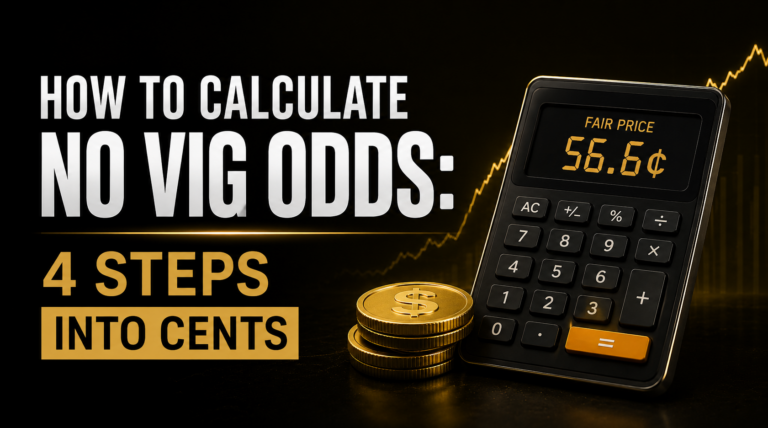
A quick note on how prediction markets work for football: Kalshi and Polymarket list contracts tied to outcomes – Premier League winner, Champions League winner, top-four finishes. Prices are expressed in cents and move like financial markets. A team priced at 51c is implying a 51% probability of winning. When that probability shifts because a squad was meaningfully upgraded or downgraded through transfers, the price follows – but not always immediately. The gap between when the information is public and when the price reflects it is where traders operate.
Table of Contents
Premier League: Arsenal at 51c, City’s £450m Bet, and Where the Value Is
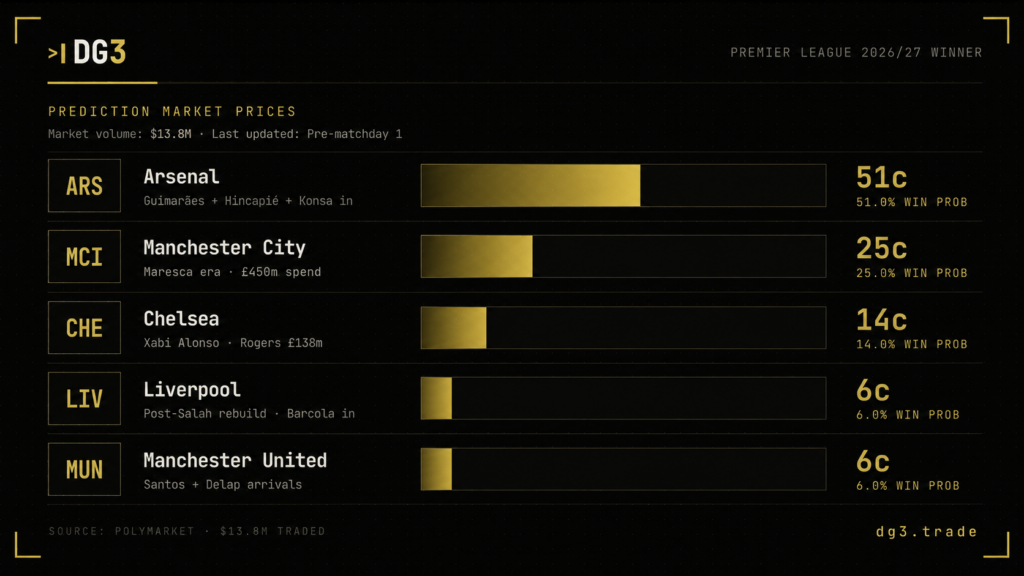
Current prices: Arsenal 51c · Manchester City 25c · Chelsea 14c · Liverpool 6c · Man United 6c
Total market volume: $13.8M
Arsenal won the 2025–26 Premier League title. They came into this window as defending champions, and they spent accordingly – not lavishly, but precisely.
Arsenal: The Two Signings That Actually Matter
Bruno Guimarães arrived from Newcastle for €87.5m. He led Newcastle’s press metrics for three straight seasons, wins second balls at an elite rate, and arrives at peak age (27) having already adapted to the intensity of the English game. Thomas Partey’s decline had left a gap in Arsenal’s midfield structure that hurt them in Europe last season. Guimarães closes it cleanly.
The defensive additions also hold up. Piero Hincapié from Bayer Leverkusen (€40m) and Ezri Konsa from Aston Villa (€59.6m) give Arteta depth at centre-back with both technical and physical quality. No panic buys. No speculative youth acquisitions at inflated prices.
What’s missing: a dominant centre-forward. Gabriel Jesus left for Barcelona at €10m. Leandro Trossard departed for Besiktas. Arteta’s system generates chances well enough that a single striker isn’t required, but the absence becomes a real risk during autumn fixture congestion.
At 51c, the prediction market is backing defensive solidity and Arteta’s continuity premium – the fifth year of a coherent system with a reinforced midfield. That’s a defensible position. The risk is that Chelsea and City both upgraded their finishing options this summer while Arsenal trimmed theirs.
Manchester City: Spent the Most, Priced the Lowest of the Contenders
£450m. That’s what Enzo Maresca inherited to work with. It’s also the largest spend in Premier League history for a single transfer window.
The new arrivals: Enzo Fernandez (€145m from Chelsea), Elliot Anderson (€135m from Nottingham Forest), Ayyoub Bouaddi (€95m from Lille), Iliman Ndiaye (€70m from Everton), and five more. The outgoings tell the harder story – Rodri, Bernardo Silva, John Stones, Savio, and Tijjani Reijnders all left in the same summer. That’s a combined loss of experience and system knowledge that no single window’s spending can instantly rebuild.
Prediction markets have City at 25c. That’s not disrespect for the squad – it’s a direct read on Maresca. He hasn’t managed at this scale. Fernandez has been inconsistent since his record move to Chelsea in 2023. Bouaddi is 17. A 17-year-old, regardless of how brilliant he looked at Lille, brings genuine starting-eleven risk.
Here’s the real question: what happens to City’s price if Maresca clicks by October?
A domestic run – say, six wins from the first eight – pushes their EPL price from 25c toward 35c. That pulls their Champions League implied probability with it. Watch the first five fixtures. Don’t touch the market until you have that read.
Chelsea: Xabi Alonso’s Rebuild and the 14c That Feels About Right
Xabi Alonso taking the Chelsea job was the summer’s defining managerial story. His first major transfer decision got people talking fast. Morgan Rogers from Aston Villa, €138m, club record. Rogers is 23 and technically gifted. He’s also not a €138m player by any current output measure – that fee prices in trajectory, which is either a bet on genius or a lot of money for potential.
Marco Palestra (€57m from Atalanta), Geovany Quenda (€50m from Sporting), Emmanuel Emegha (€25m). And out: Fernandez, Jackson, Delap, Santos. The entire attacking core. Gone in eight weeks. Replaced wholesale.
At 14c, traders are giving Alonso credit for the quality of his ideas while withholding full confidence until they see the team cohere. That’s the right call. The best case for Chelsea holders: Alonso’s structure brings clarity quickly and Rogers delivers 15+ Premier League goals in his first full season at a top club. The first six to eight games will price this in or out.
Liverpool: Replacing Salah
Mohamed Salah left for Trabzonspor. Andy Robertson followed him to Tottenham on a free. The two departures together represent years of accumulated output leaving in a single summer.
Bradley Barcola came from PSG for €125m as the headline replacement. Jeremy Jacquet from Rennes (€63.6m). Ronald Araujo on loan from Barcelona. Barcola is explosive, direct, and three years younger than Salah was when Liverpool first bought him. But he hasn’t played in the Premier League, and transition risk on a €125m purchase is real.
The 6c price correctly reflects the rebuild stage. Liverpool aren’t out of the title race structurally – the squad depth is still there – but the market is right to price in the adjustment period of replacing a generational contributor.
Where the Premier League Value Is
The 26-cent gap between Arsenal (51c) and City (25c) represents the market pricing Maresca’s uncertainty, not squad quality alone. If that gap closes to 15 cents by November because City are winning, the correction will be fast. The current City price may be the window’s best domestic value bet – but only after you’ve watched how Maresca uses his first month.
La Liga: Rodri to Barcelona and Why Mourinho at 39c Makes Sense
Current prices: Barcelona 59c · Real Madrid 39c · Atlético Madrid 2.6c
Total volume: $5.1M
José Mourinho is back. He took the Real Madrid job after two trophyless seasons under previous management, and he hasn’t wasted his opening weeks.
Barcelona: Adding Rodri to a System That Already Won Back-to-Back Titles
Hansi Flick won the last two La Liga titles. His system is established. His players understand it. The additions this summer don’t disrupt what’s working – they compound it.
Rodri from Manchester City is the transfer of the summer. Full stop.
At Barcelona, as the defensive midfield anchor in Flick’s high-press structure, he doesn’t need to be his 2023 peak to transform the team. He gives the forwards license to commit – they know the second and third transitions are covered behind them. Anthony Gordon from Newcastle (€80m) brings width and directness on the left that Raphinha alone couldn’t always provide. Karim Adeyemi from Borussia Dortmund completes the forward rotation.
At 59c, prediction markets are backing the deepest squad in Spain with the best system and now arguably the best midfielder in Europe. That’s not an overreaction. It’s the correct read.
Real Madrid: The Mourinho Math
Madrid spent heavily and selectively. Yan Diomande, the 19-year-old Ivory Coast winger, arrived from RB Leipzig for €135–140m – the club’s record fee, and a high-variance commitment on a player who had one outstanding Bundesliga season. Marc Cucurella came from Chelsea (€55m). Ibrahima Konaté on a free. Bernardo Silva on a free from City. Denzel Dumfries from Inter.
Mourinho acknowledged missing Rodri as the one window failure. Without that anchor, he plans to use Aurélien Tchouaméni in the controlling role once fit. Vinicius Jr. remains. Jude Bellingham is at the club. Diomande provides the vertical pace Mourinho’s previous squads lacked.
At 39c, the market is applying the standard Mourinho discount – he hasn’t won a major European title since 2010, he’s unproven in his current managerial era at elite level, and his first season at a new club often involves friction before it produces results. That discount is reasonable. But this Madrid squad, if Diomande develops quickly and Tchouaméni holds the midfield, is meaningfully better than last season.
The prediction market angle: a 20-cent gap between Barcelona and Madrid is the market saying Rodri matters more than Diomande. That’s correct. But Mourinho in season two of a well-resourced rebuild typically overperforms. A small position on Madrid at 39c has real narrative logic.
Serie A: The Tightest Title Market in Europe
Current prices: Inter Milan 47c · Roma 13.6c · Juventus 13c · AC Milan 13c · Napoli 10c
Total volume: $239K
No league on prediction markets is harder to call right now. Four clubs sit within four cents of each other behind Inter.
Inter: Champions on a Maintenance Budget
Inter won Serie A by 11 points last season. Their window was functional rather than ambitious. Djed Spence replaced Denzel Dumfries (€30m). John Stones on a free from City brought experience at centre-back. Curtis Jones came from Liverpool (€30m). No marquee additions – just system maintenance.
Under Cristian Chivu, Inter’s structure has never demanded star power. It demands players who understand roles. Lautaro Martínez and Marcus Thuram remain. The engine is intact.
At 47c, the market respects them as champions without fully committing. It’s a hedged position. Three rivals spent significantly more this summer, and maintenance windows produce entropy eventually – not immediately, but the gap narrows. Still: 47c for the defending champion, in a field where no rival clears 14c, is defensible.
AC Milan: The Big Spenders with a New Manager
Milan had the highest Serie A spend. Gonçalo Ramos from PSG (€74m). Diego Moreira from Strasbourg (€65m). Rubén Amorim as head coach – a tactically attacking manager whose systems look attractive in theory and take time to embed in practice.
At 13c, the market is saying: interesting in January, not yet clear in September. That’s fair. The question for holders of Milan contracts: does Ramos start the season like a €74m striker, or does it take six months for him and Amorim to find each other?
The Speculative Value in Serie A
Napoli at 10c under Massimiliano Allegri is the one price worth watching. Allegri doesn’t need a perfect squad to extract results – his entire record is built on getting disciplined performances from mixed-quality groups. If Napoli are compact and hard to beat from September, 10c won’t hold for long. Not a favourite position. A value one.
Bundesliga and Ligue 1: When One Market Is Already Priced In
Bundesliga: Bayern at 88% for Champions League Qualification
Vincent Kompany won the Bundesliga in his first season. Harry Kane won the Golden Boot again. The summer was restrained by Bayern standards – Ismael Saibari from PSV on a five-year deal, Nathaniel Brown from Eintracht Frankfurt for wing-back cover. Leon Goretzka, Joao Palhinha, and Alexander Nubel left.
There’s no dedicated Bundesliga outright on the major prediction markets right now. The actionable line is the Champions League qualification market, where Bayern sit at 88% for next season’s UCL slot. That’s fair value given their domestic dominance. Borussia Dortmund at 67% is worth monitoring – they spent the most of any Bundesliga club this summer, including Konstantinos Karetsas (18, from Genk) and Giannis Konstantelias from PAOK, and they’ve been consistent UCL participants for three straight seasons.
Ligue 1: 87c Is a Done Deal
PSG at 87c to win Ligue 1 is five consecutive titles of context. They sold Barcola to Liverpool but remain incomparably stronger than anything Marseille, Lens, or Lille can field.
Lens beat PSG in the Trophée des Champions pre-season. It registered zero movement on prediction markets. PSG’s domestic price doesn’t move on pre-season results. There is no practical trade available in Ligue 1 at these prices unless you’re taking a position on a PSG squad injury crisis that has no current evidence behind it.
UEFA Champions League: The $20.9M Market Nobody Can Call
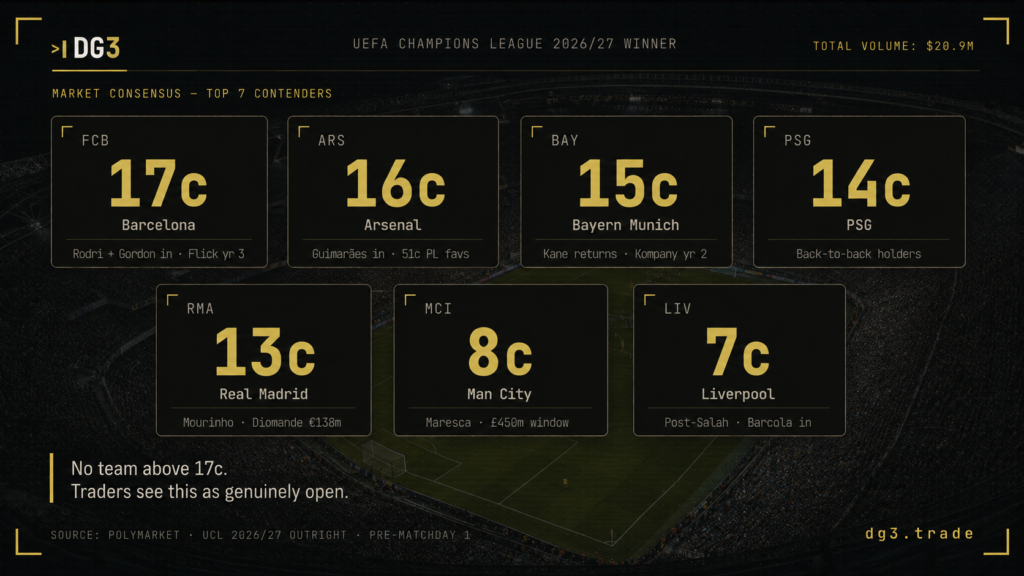
Current prices: Barcelona 17c · Arsenal 16c · Bayern Munich 15c · PSG 14c · Real Madrid 13c · Man City 8c · Liverpool 7c
Total volume: $20.9M
This is the richest prediction market of the summer – $20.9m traded across 36 possible outcomes, with the leader priced at just 17c. The market is telling you explicitly: nobody knows.
PSG are back-to-back Champions League holders and priced fourth. Barcelona lead despite an inconsistent recent UCL record. Arsenal sit at 16c – their highest implied probability in this competition in years, reflecting both the Guimarães upgrade and the fact that Arteta finally has a squad built specifically for knockout football rather than one still learning the format.
Manchester City at 8c is the structural standout. They’re the only top-seven club still integrating an entirely new system. If that system clicks by February – when the knockout phase starts – 8c from October will look very cheap for a squad with €450m of talent. The correct trade isn’t taking 8c cold today. It’s watching City’s domestic form between September and February and entering the UCL market as their club-title price shifts.
The correlation trade is smarter than the outright: Arsenal’s EPL price (51c) against their UCL price (16c) suggests the market believes they can’t do both. If Arsenal’s domestic odds drift down through autumn, their UCL price should move before prediction markets catch up. That gap is where you trade.
How to Trade Transfer News on Prediction Markets
Prediction markets for football outcomes – available on both Kalshi and Polymarket – are not the same as traditional sports betting. A few things that matter for anyone applying transfer window analysis to actual positions:
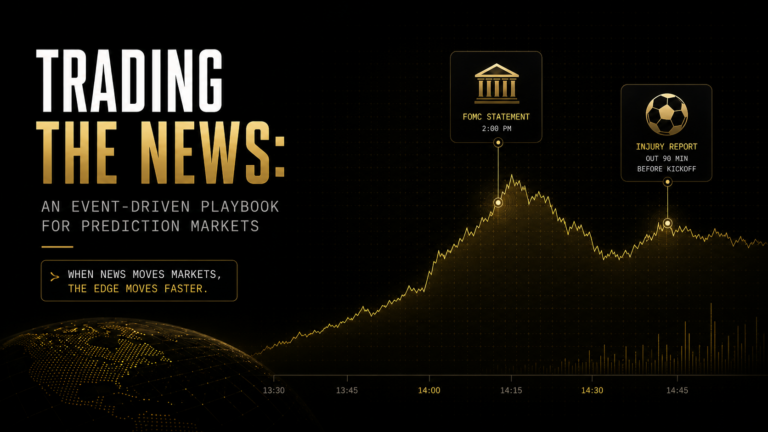
Prices move fast after major announcements. The Rodri-to-Barcelona deal was widely reported before the club confirmed it. Traders who acted on credible reports early got better prices. That’s legal on prediction markets – information advantage is part of the structure here, not a regulatory grey area.
Volume matters as much as price. A team priced at 39c on $200K volume is less meaningful than the same team at 39c on $5M volume. La Liga’s $5.1M total is actionable. Serie A’s $239K means individual positions can move the market.
Transfer window impact decays. A signing made in July is already four to six weeks old by the time the first serious league fixtures arrive. Prediction market prices adjust most dramatically in the 72 hours after a confirmed transfer, then stabilise. If you’re reading this after that window has closed, the first signs of on-pitch evidence matter more than the deal itself.
Kalshi vs Polymarket for football: Both platforms list European football outright markets, but they’re different things. Kalshi is CFTC-regulated – a Designated Contract Market legal for US traders. Polymarket runs on the Polygon blockchain and is blocked for US residents. Prices usually track each other closely, but they can diverge on lower-volume markets like Serie A or the Bundesliga. Worth checking both before you enter.
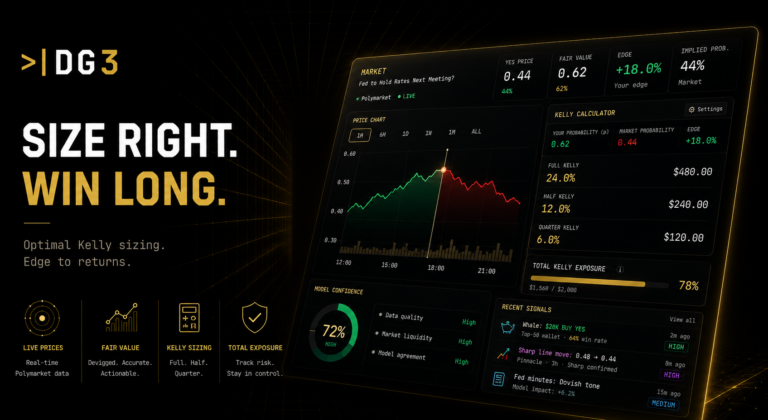
You can track live prediction market prices, volume changes, and odds movement across all major European football markets at DG3 Terminal.
FAQs
What are prediction markets for football?
Prediction markets are financial contracts tied to the outcome of a future event. In football, you can buy contracts on which team wins the Premier League, Champions League, or a specific match. Prices move between 0 and 100 cents based on what the collective market believes the probability is. If you buy Arsenal to win the Premier League at 51c and they win, the contract pays out at 100c – a 49c profit per contract.
Are Kalshi and Polymarket the same?
No. Kalshi is a US-regulated Designated Contract Market operating under CFTC oversight, which means it’s legal for US traders. Polymarket operates on the Polygon blockchain and is not accessible to US residents due to regulatory restrictions. Both list football prediction markets, but their prices can diverge, especially on lower-volume events.
How does a transfer affect prediction market prices?
A major signing directly changes the perceived probability of a team winning a competition. When Rodri signed for Barcelona in July 2026, Barcelona’s La Liga contract moved from roughly 55c to 59c within 48 hours. The market priced in the fact that a controlling midfielder of that calibre changes a team’s seasonal probability meaningfully. Not every transfer moves prices – only those that materially change a squad’s expected output.
Is trading prediction markets legal?
In the US, Kalshi is CFTC-regulated and legal for US residents. Polymarket is not accessible to US residents. Outside the US, the regulatory picture varies by country. DG3 recommends checking your local regulatory framework before placing any prediction market trade.
Where can I track live football prediction market odds?
DG3 Terminal at dg3.trade/terminal tracks live prediction market prices across Kalshi, Polymarket, and other platforms – including volume movement, price history, and cross-platform comparison for major European football competitions.
What is the Kelly Criterion and does it apply to prediction market trading?
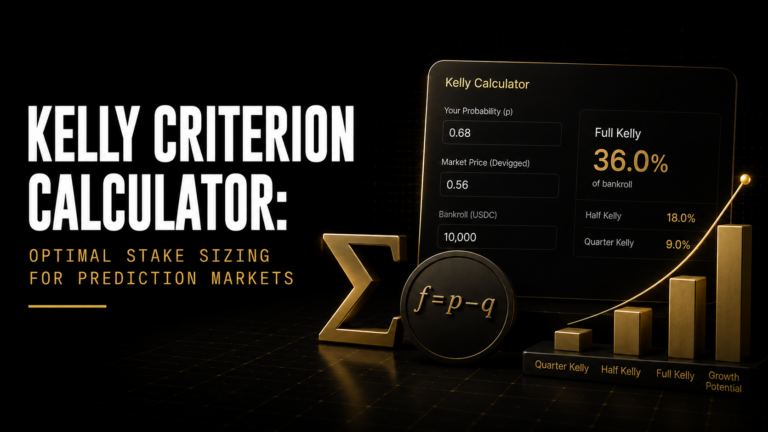
The Kelly Criterion is a mathematical formula for calculating optimal bet size based on your perceived edge over the market. It’s widely used by professional sports bettors and is directly applicable to prediction market trading. If you believe Arsenal’s true probability of winning the Premier League is 58% but the market prices them at 51c, the Kelly formula tells you what percentage of your bankroll to allocate to that position.
Live prediction market data, movement tracking, and cross-platform odds comparison for European football is available at dg3.trade/terminal.