It was a Sunday evening in October. Priya was on the sofa, phone in hand, going through her weekend bets. Six wins. Four losses. She had a sharp eye all weekend. Picked the right teams, called two upsets nobody saw coming.
She opened her account expecting to see green.
The balance was lower than Friday.
The Scoreboard That Has Been Lying to You
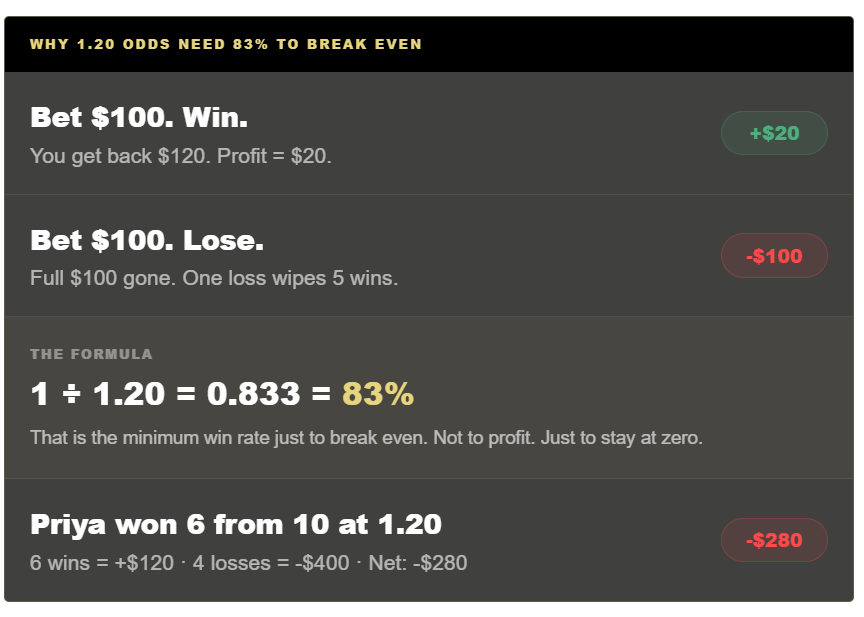
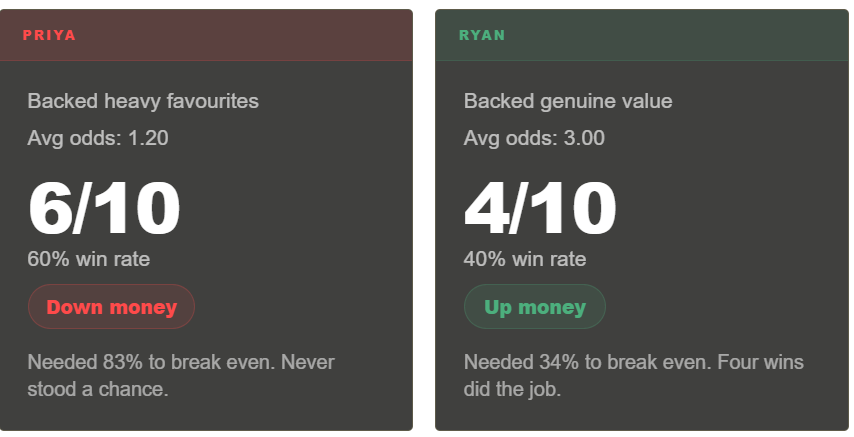
Priya backed heavy favourites all weekend. Average odds of 1.20. Six came in. Four did not. Felt like a solid record.
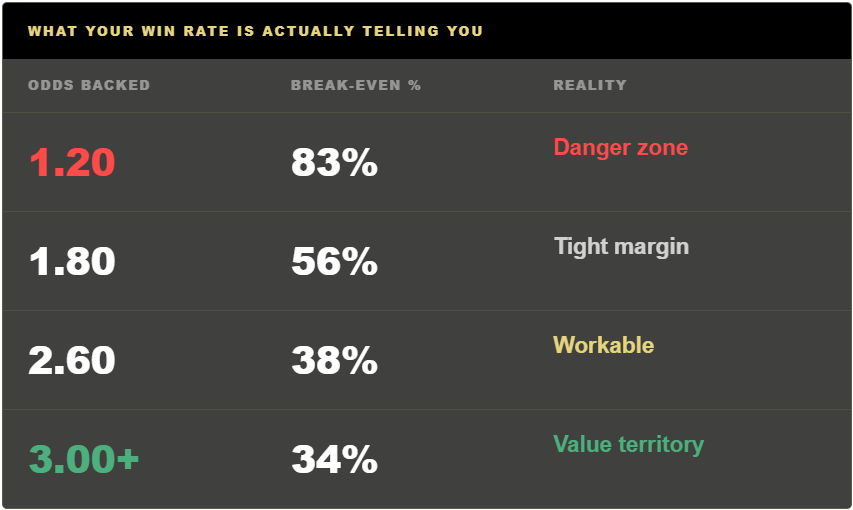
At odds of 1.20, you need to win 83% of your bets just to break even. Priya won 60%. She was mathematically finished before the weekend even started.
“It is not about how often you win. It is about what you win, when you do.”
The Two Letters That Change Everything
That Sunday night Jordan explained it to Priya over the phone. “I stopped thinking about winning,” he said. “I started thinking about value.”
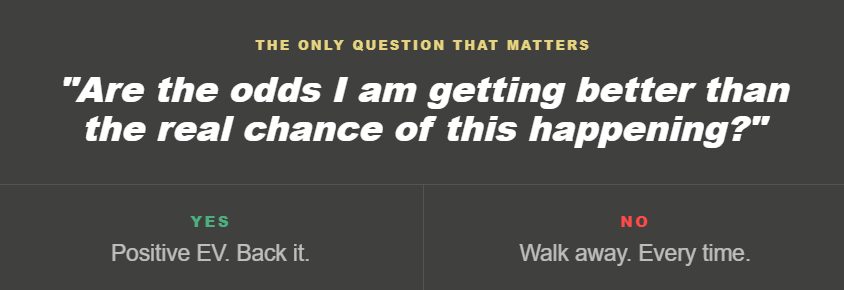
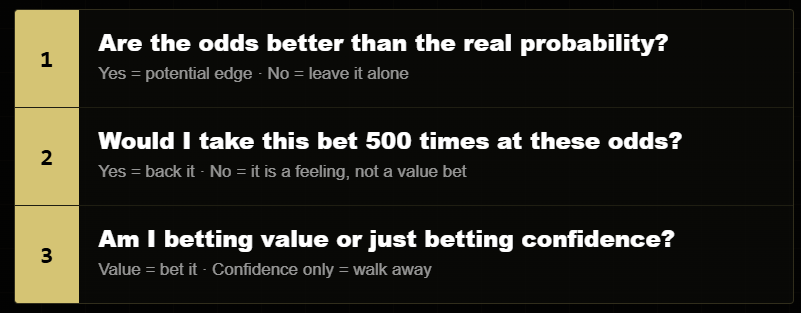
He called it EV. Expected Value. One question asked before every single bet:
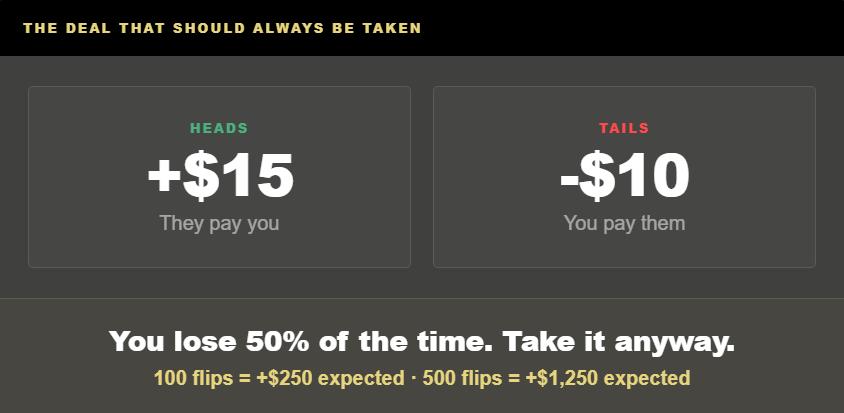
“Forget football for a second,” Jordan told her. “Just imagine a coin flip.”
Same Weekend. Opposite Lessons.
Two punters. Same ten matches. One chased certainty. One chased value. Here is what happened.
Priya won more bets. Ryan made more money. Win rate lied. EV told the truth.
Thinking Sharp: Survival “The bookmaker’s edge is not built into who wins. It is built into the odds. Find the gaps or you are already behind.”
Every price on the board has a margin baked in. Your job is to find the bets where the edge is yours – and back them every time you find them.
The Cold Run That Breaks Most Punters
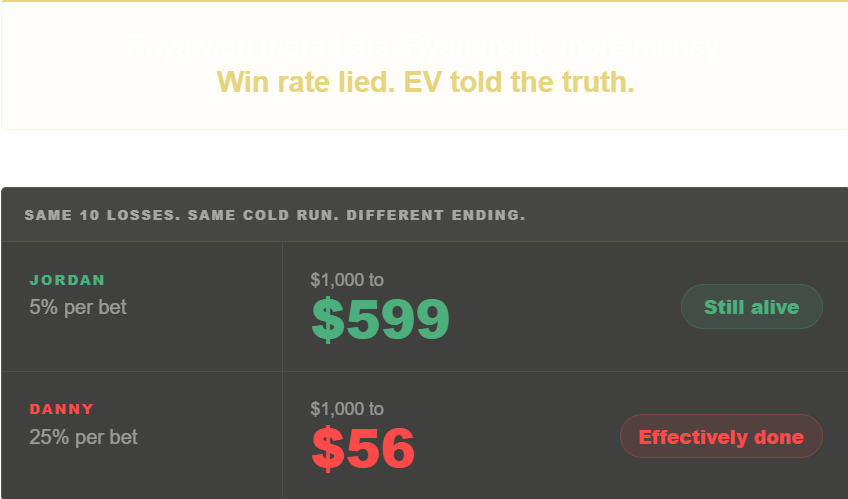
Three weeks later Priya hit eight losses in a row. Good bets every time. Value odds, proper research, positive EV. The old voice got loud.
Bet bigger. Chase it back. Change something.
She rang Jordan. He asked one question: “Were these good bets?” They were. He told her to stay the course.
Losing streaks end. Negative EV never stops bleeding you.
Three Questions Before Every Bet
Six months on, Priya still loses bets. Some weeks 3 from 10. But her balance is steadily, quietly higher than October. She changed one thing: the question she asks before placing anything.
Stop asking if you won. Start asking if the bet was right.
A good bet that loses is still a good bet. A bad bet that wins is still a mistake – one that quietly teaches you the wrong habits at the worst possible time.
Find the edge. Back it. Stay in the game long enough to collect.
“Back the edge. Not the result.” The money follows the process. Always.